Sonnet 5.5 vs GPT-6.1 Sol Six-Legged Walker Game
2 min read
Build log ·
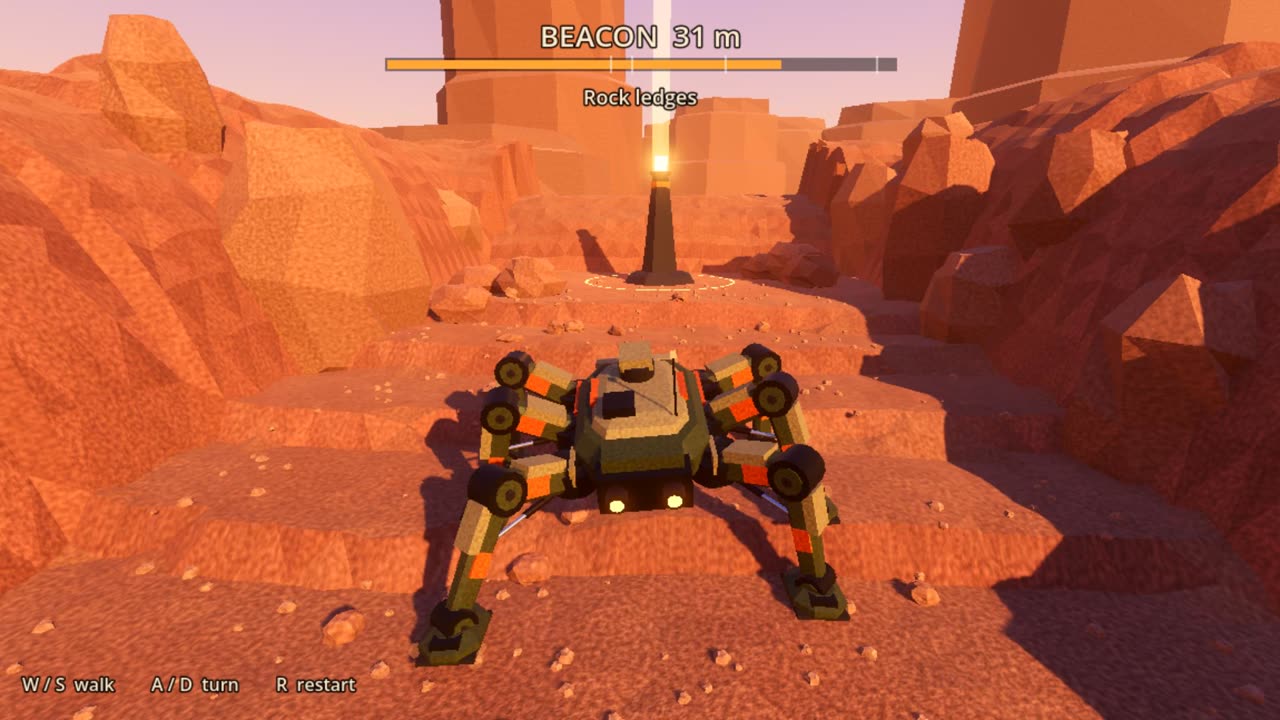
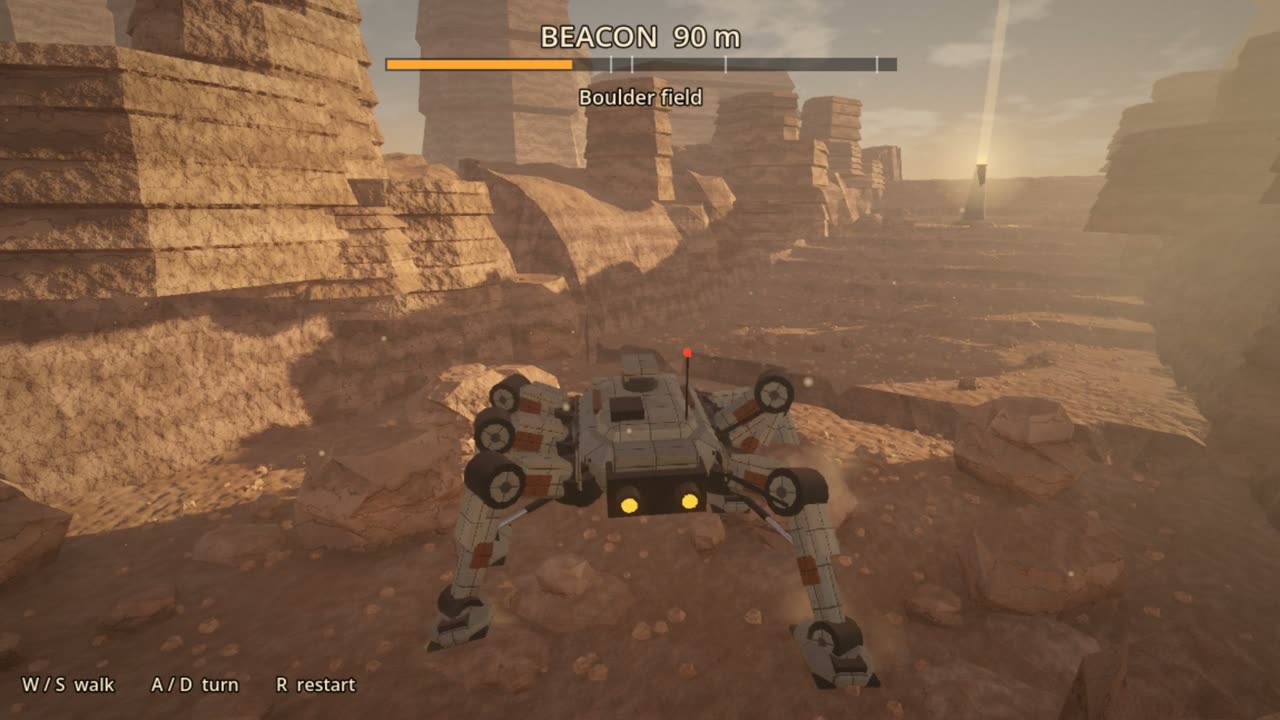
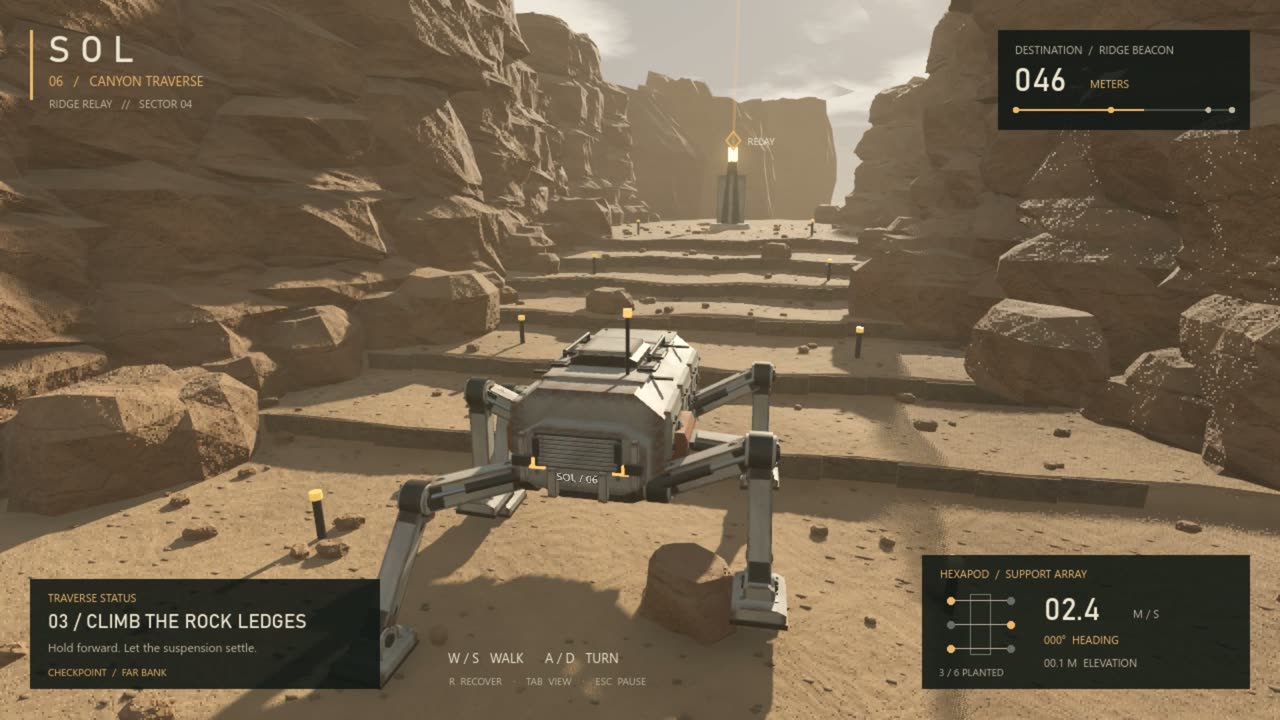
Can an AI agent build a six-legged walker that never slides a foot? Claude Sonnet 5.5 in Claude Code and GPT-6.1 Sol in Codex got the same prompt and the same three reference pictures: a walker in Godot whose legs find the ground with raycasts, stay planted, step in a tripod gait and bend at the knee with inverse kinematics, over boulders, a trench and a flight of rock ledges. No keyframed walk, no downloaded or generated 3D models. Both worked directly in the Flockbay app, on the Godot engine, pressed Play themselves, and decided when they were done. Then each got one more message: make it look as realistic as possible.
The test
The two models cost the same per token. The bill, estimated at API prices, was not the same, and the video shows where it went.
Both walkers were driven by the same script on each game's own W, A, S and D.
The prompt
The exact prompt both models got:
Build a six-legged walker game in Godot. The player pilots a six-legged walking machine from a landing pad across a rocky canyon to a beacon on a ridge. W and S walk it forward and back, A and D turn it. On the way, the canyon floor is strewn with boulders, there is a trench to step across, and a flight of rock ledges to climb. The legs must be animated procedurally: each foot finds the ground with a raycast and stays planted while the body moves, then lifts and steps when it falls too far behind, and each leg is solved with inverse kinematics so the knee bends. Don't use a keyframed or pre-made walk animation, and don't let the feet slide. The body should ride over the terrain and tilt with it. Use a third-person camera behind the walker. Make the walker feel heavy, and make it look like the reference pictures. Build every model yourself from code or primitives; don't download or generate 3D models. Playtest it yourself and hand it over when you think it's done.
What was judged
How close it looks to the reference.
The walk: planted feet, reach, the gait, the knees, the body's ride.
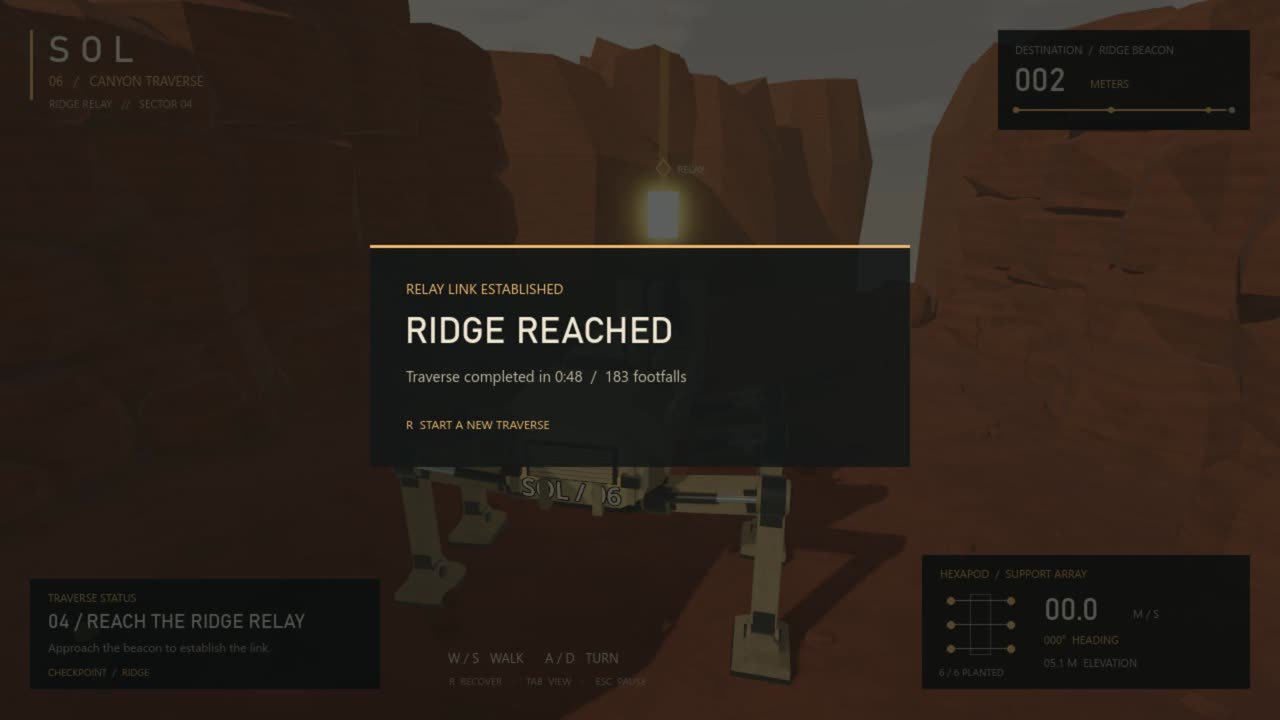
Whether it finishes the course: the boulders, the trench, the ledges, the beacon.
What it cost: tokens, calls, time, and the estimated API bill.
The second pass: how real it looks, what that cost in tokens and in frame rate, and whether the walk survived it.
In the video
[0:00](https://www.youtube.com/watch?v=Sd8y0284XUA&t=0s) Opus won the last two
[0:39](https://www.youtube.com/watch?v=Sd8y0284XUA&t=39s) Six legs this time
[1:20](https://www.youtube.com/watch?v=Sd8y0284XUA&t=80s) The job
[1:34](https://www.youtube.com/watch?v=Sd8y0284XUA&t=94s) The models and the rules
[2:07](https://www.youtube.com/watch?v=Sd8y0284XUA&t=127s) Who drives
[2:18](https://www.youtube.com/watch?v=Sd8y0284XUA&t=138s) The reference
[2:33](https://www.youtube.com/watch?v=Sd8y0284XUA&t=153s) What a good walk looks like
[3:16](https://www.youtube.com/watch?v=Sd8y0284XUA&t=196s) What we are testing
[3:37](https://www.youtube.com/watch?v=Sd8y0284XUA&t=217s) Sonnet 5.5
[4:25](https://www.youtube.com/watch?v=Sd8y0284XUA&t=265s) Where Sonnet stops
[5:06](https://www.youtube.com/watch?v=Sd8y0284XUA&t=306s) GPT-6.1 Sol
[6:14](https://www.youtube.com/watch?v=Sd8y0284XUA&t=374s) Side by side
[6:29](https://www.youtube.com/watch?v=Sd8y0284XUA&t=389s) Neither stands on its legs
[7:55](https://www.youtube.com/watch?v=Sd8y0284XUA&t=475s) The second pass: make it real
[9:14](https://www.youtube.com/watch?v=Sd8y0284XUA&t=554s) What realism cost
[9:35](https://www.youtube.com/watch?v=Sd8y0284XUA&t=575s) The bill
[10:18](https://www.youtube.com/watch?v=Sd8y0284XUA&t=618s) Who takes it
The results, measured
| Sonnet 5.5 | GPT-6.1 Sol | |
|---|---|---|
| First pass | 27.9 min, 21 Plays, 88 calls | 25.0 min, 8 Plays, 30 calls |
| Output tokens | 163,012 (93,687 thinking) | 37,853 (8,104 reasoning) |
| Cached tokens read | 16.7 million | 2.0 million |
| First pass, on API prices | about 6.05 dollars | about 0.86 dollars |
| Second pass | 11.6 min, 11 Plays, 37 calls | 30.9 min, 7 Plays, 21 calls |
| Second pass, on API prices | about 4.63 dollars | about 0.91 dollars |
| Code handed over | 1,703 lines of GDScript in 6 files | 909 lines of GDScript in 4 files, 3 shaders, 2 test scripts (132 lines) |
Costs are estimates at public API prices, read on the day. Both runs went through a subscription.
From the filmed games