What is actually inside a third-person game
Third-person movement looks like one feature and is really four systems arguing with each other. This is what each one does, and which one causes the problem you are actually feeling.
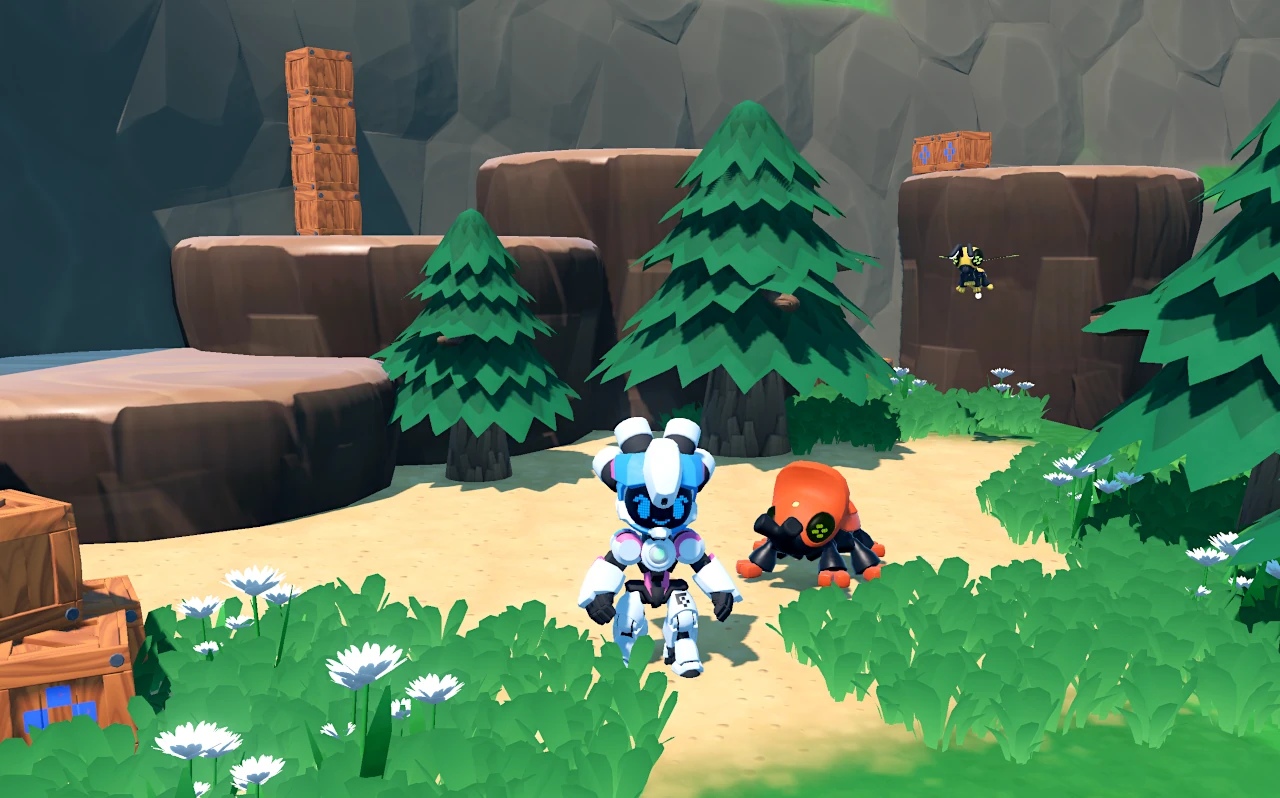
Four systems, not one
A third-person game is built from four parts that most people experience as a single sensation. There is a character controller that turns input into movement. There is a camera rig that decides what you can see. There is the navigable space itself, which decides where you can go and what you understand about the room. And there is the feedback layer: the footstep sound, the animation blend, the small camera dip on landing.
This matters because when a third-person game feels wrong, the instinct is to describe the whole thing as "floaty" or "clunky". Almost always, one specific system is responsible. Naming the right one is the difference between a fix and a week of guessing.
Movement that feels sluggish is usually acceleration, not top speed. Movement that feels slippery is usually deceleration. A game that feels disorienting is almost never the controller at all: it is the camera.
Why the camera is the hard part
The character controller is the part people expect to be difficult, and it is the part that is largely solved. Move a capsule, apply gravity, handle slopes, handle jumps. The behaviour is well understood and small numeric changes produce predictable results.
The camera is where third-person games are won or lost, because the camera has to satisfy several goals that directly contradict each other. It must stay close enough that the character feels present, far enough that you can read incoming threats, stable enough that it does not induce motion sickness, and responsive enough that it does not lag behind a fast turn. It must also not pass through walls.
That last constraint is the one that generates the most frustration. A camera that collides with geometry has to move somewhere, and every option is bad in some situation: pushing in makes tight corridors claustrophobic, fading the wall breaks the illusion, and swinging around the obstacle disorients the player mid-fight. Commercial games solve this with genre-specific compromises, not a universal answer.
The practical consequence: if you are shaping a third-person game and something feels off, check the camera before you touch the movement numbers.
What the space is doing
A room in a third-person game is doing more work than it appears. It sets sightlines, which determine how much warning a player gets. It sets traversal rhythm through the spacing of obstacles. And it teaches the player what the vocabulary of your game is: if the first room has a ledge, the player learns that ledges are climbable, and will expect that everywhere.
The most common early mistake is building a space that is too open. An open space gives the player no reference points, which makes movement feel weightless and makes the camera harder to tune, because there is nothing for it to frame. Corridors and landmarks are not restrictions; they are what makes movement legible.
What to change first
Change one variable at a time and play after each one. This sounds obvious and almost nobody does it, because it is tempting to fix five things at once and then discover the combination feels worse without knowing which change caused it.
A reasonable order: get the camera distance and follow speed comfortable first, because everything else is judged through the camera. Then acceleration and deceleration, which control the sense of weight. Then the space, once you know how far the character actually travels in a second. Feedback last, because feedback amplifies whatever is already there, including problems.